Chemical Traffic Light
Reagents and supplies:
- glucose (6 g);
- indigo carmine (0.01 g);
- 1 M solution of sodium hydroxide (40 ml);
- beakers (3);
- distilled water.
Instructions:
Dissolve approximately 6 ml of glucose in 200 ml of warm distilled water.
Add 40 ml of sodium hydroxide solution.
In another beaker, dissolve the indigo carmine, creating a blue solution.
Pour the alkaline solution of glucose and the indigo carmine solution into a large beaker and cover it.
Observe the change in color.
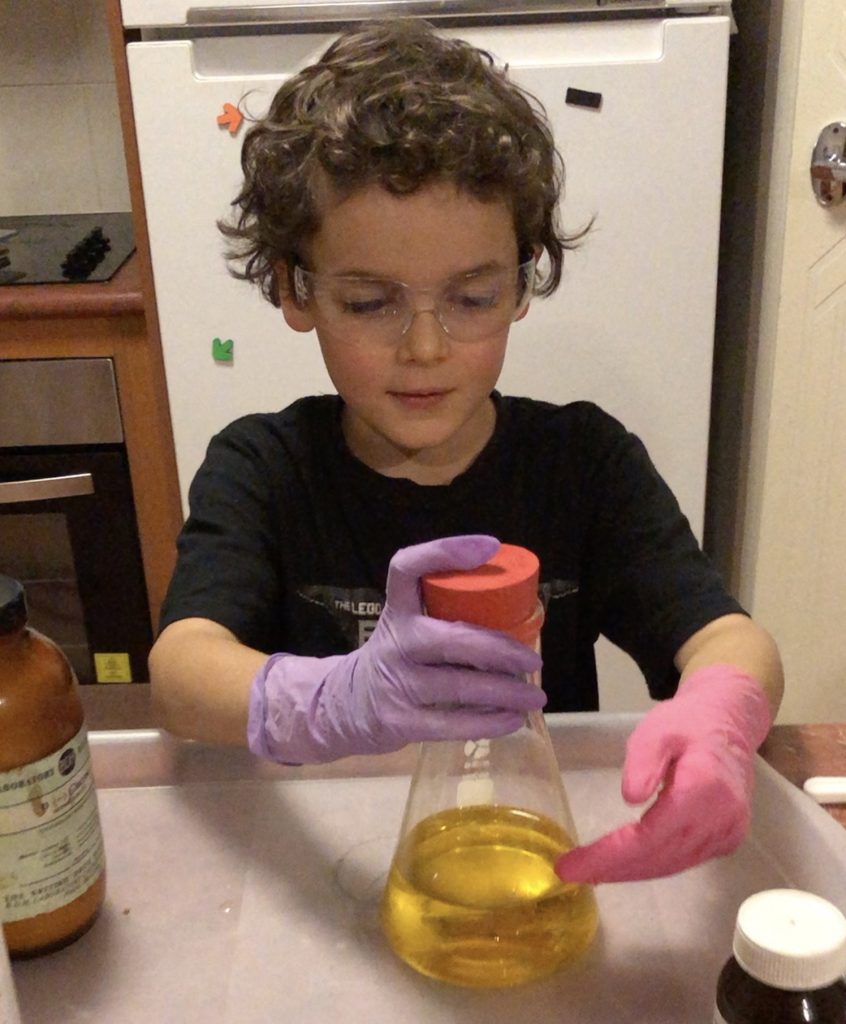
Once it’s finished changing colour, shake again and observe!
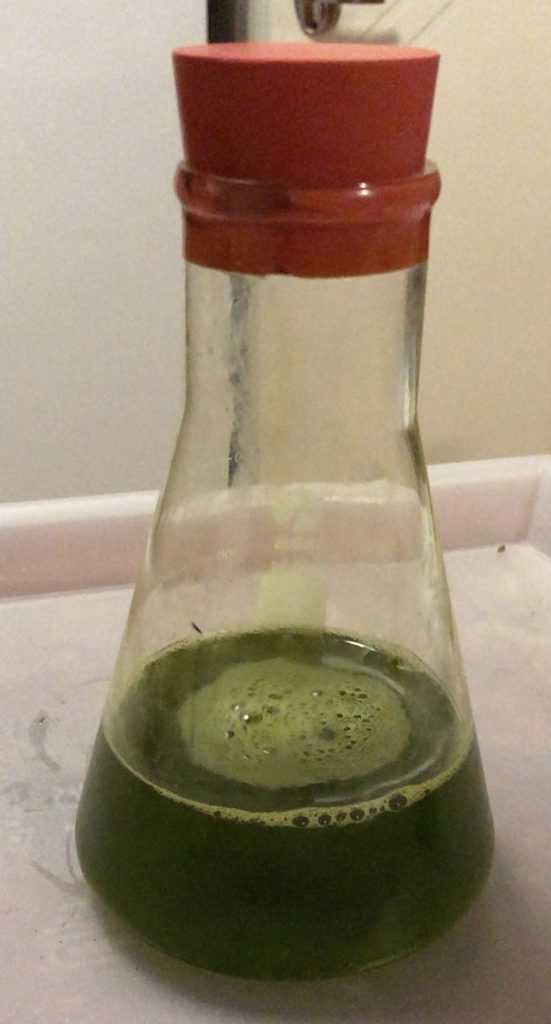
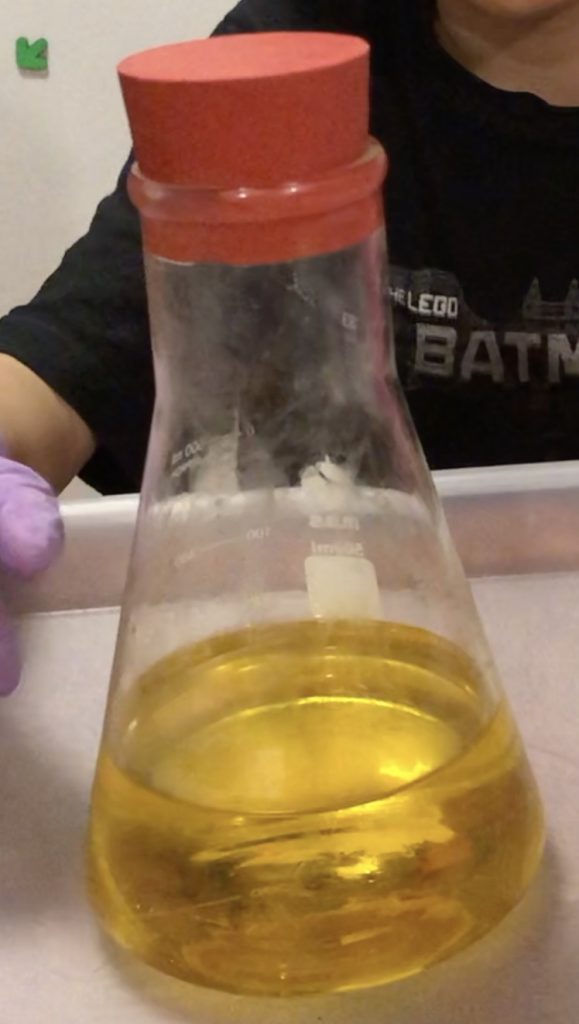
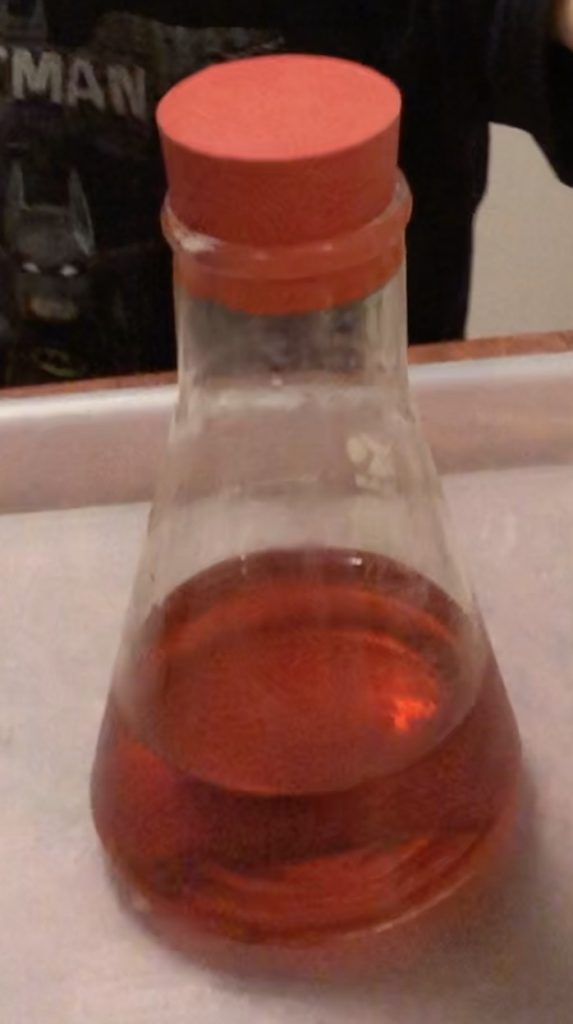
Initially, the solution colored by the indigo carmine (blue) is oxidized by the oxygen in the air to a green color – this is the color of its oxidized form. When the green solution is left to stand, the glucose begins to reduce the indigo carmine, first to red, and then to yellow. If you shake the solution or decant it, it mixes with air, and the oxygen once more oxidizes it to green.
SAFETY PRECAUTIONS
When working with sodium hydroxide, wear rubber gloves and protective glasses, as it causes burns if it gets on the skin or in the eyes.Warning! Substances of this experiment are toxic and highly dangerous for your health.